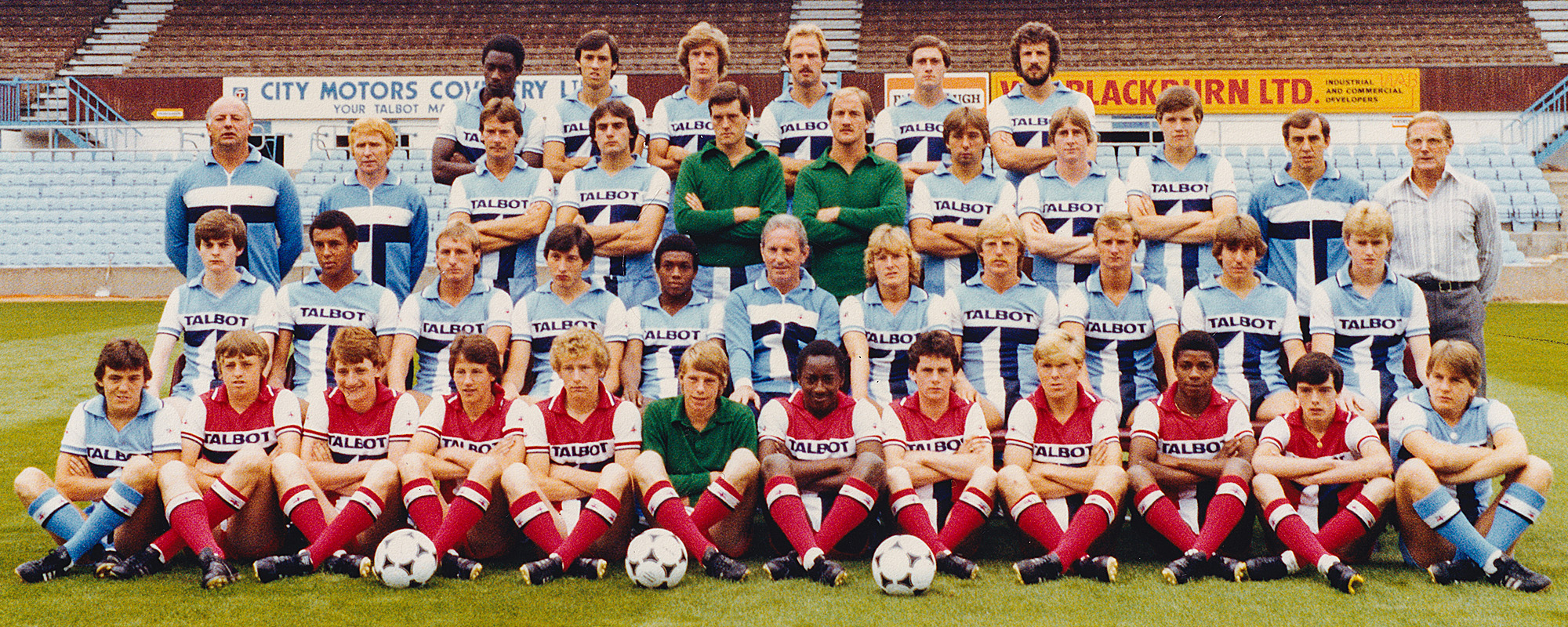
Middle row (l-r);
Front row (l-r);
By Jim Brown
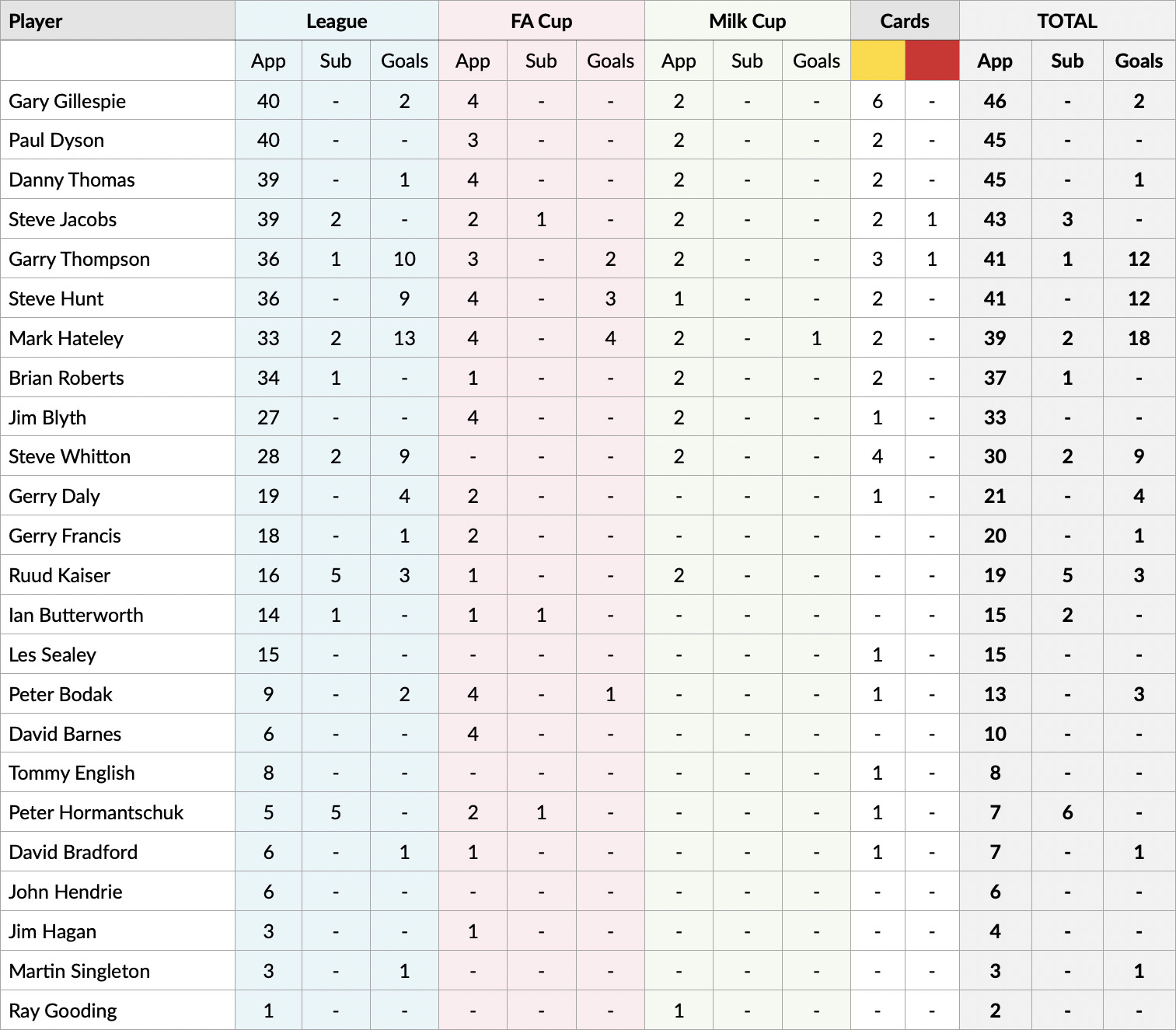
The new season opened with the perfect test for new manager Sexton’s young lions – his old club Manchester United. It was also the perfect curtain raiser for the club’s new all-seater stadium. The long suffering fans had seen three more sales in the summer, to add to the growing exodus over the last few years. Injury-jinxed Mick Ferguson left for Everton for £280,000, promising winger Gary Bannister moved to Sheffield Wednesday for £100,000, and Scottish Under-21 midfielder Andy Blair was sold to Aston Villa for £300,000. Several other players also left on free transfers – the veteran Mick Coop moved to Derby, Jim Holton followed Bannister to Hillsborough, and Roger Van Gool returned to Belgium to play for Antwerp in exchange for young Dutch winger Rudi Kaiser. Along with the lightweight David Bradford, bought for £60,000 from Washington Diplomats, Kaiser was City’s only newcomer.
What puzzled supporters at this time was the apparent willingness of the board to invest in anything except new players. Many fans were at a loss to understand the direction the club was taking. This encouraged a sense of alienation on their part, as did the attempts to change the club’s name, the introduction of a garish strip incorporating the Talbot logo, not to mention the all-seater stadium, tickets for which were expensive and had to be bought at least 48 hours before the game.
For their part, the board argued that they had taken account of the broader economic situation. Declining gates and escalating running costs had driven some clubs to the edge of bankruptcy, and many others were carrying huge overdrafts. The board did not want City to become a victim of soccer’s recession, but in their efforts to anticipate the various pitfalls, they were caught in a downward spiral, which became increasingly difficult to reverse.
The club’s finances were not helped by an ill-advised overseas investment. £500,000 was written off when the Washington Diplomats, owned by Jimmy Hill’s World Soccer Academy, folded. It was within these tight financial constraints that Sexton began the task of bringing style and consistency to a talented young team.
For a while the side virtually picked itself, with another youngster, Steve Jacobs, in place of Blair and Jim Blyth back between the posts. In attack, Mark Hateley and Garry Thompson had Steve Whitton breathing down their necks, and it was Whitton, the young Londoner, who set up the opening day win against Manchester United, scoring in only his second full game. Within a week, however, all City’s inconsistencies resurfaced, with defeats recorded at Stoke and Notts County.
A safe mid-table course was steered until December, with only Liverpool lowering the flag at home, but a measly two points from eight away games told an age-old story. An unexpected 2-1 win at Tottenham, far from leading a charge towards the top six, precipitated a terrible slump. City picked up just three points, all from draws, in twelve games. The gloom was pierced only by a comfortable advance to the quarter-finals of the FA Cup, thanks to wins over Sheffield Wednesday, Manchester City and Oxford. But the Wembley train came to a shuddering halt at the Hawthorns, where Cyrille Regis’s superb goal deserved to win any match.
This poor run, which included six home defeats in a row, saw crowds dip below 10,000 for the first time since 1962. Disenchanted Steve Hunt slapped in a transfer request. A woeful 1-5 home defeat by Notts County was for many City fans the last straw. However, just as things were at their blackest, and fans wondered where the next win was going to come from, City mounted a tremendous revival. Former England captain Gerry Francis had arrived for £145,000 from QPR in February, and his experience was a major factor in the team’s resurgence. Sealey and Whitton were recalled and another youth product, defender Ian Butterworth, was given his chance. City’s first win in more than three months arrived, of all places, at Old Trafford.
That win triggered a run of thirteen games with only one defeat. Highlights of those glorious weeks included a never-to-be-forgotten 5-5 draw at the Dell, the ending of the Hawthorns jinx, and City’s biggest first division winning margin, 6-1 over Sunderland. Almost three years had elapsed since a Coventry player last claimed a hat-trick; now Mark Hateley and Steve Whitton notched one apiece in the space of four days, both away from Highfield Road.
Come the end of the season, the supporters felt more optimism than for some time. The younger players had responded well to Sexton’s astute coaching, and the acquisition of the experienced Gerry Francis appeared to be a master stroke. Sexton’s coaching was already paying dividends. Thompson, Hateley and Danny Thomas were England Under-21 regulars, and within a few months Thomas would be called into the full England squad.